
Toothache Plant
Scientific Name: Acmella oleracea
Also known as: Buzz buttons, electric daisy, eyeball plant, paracress, Sichuan buttons
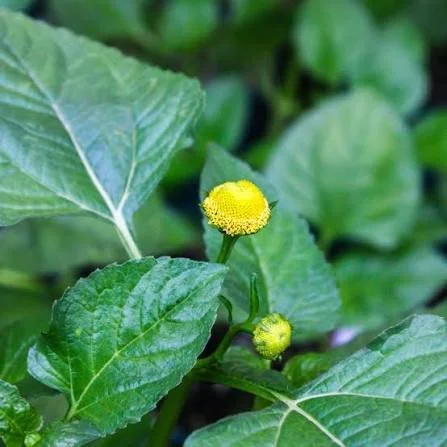
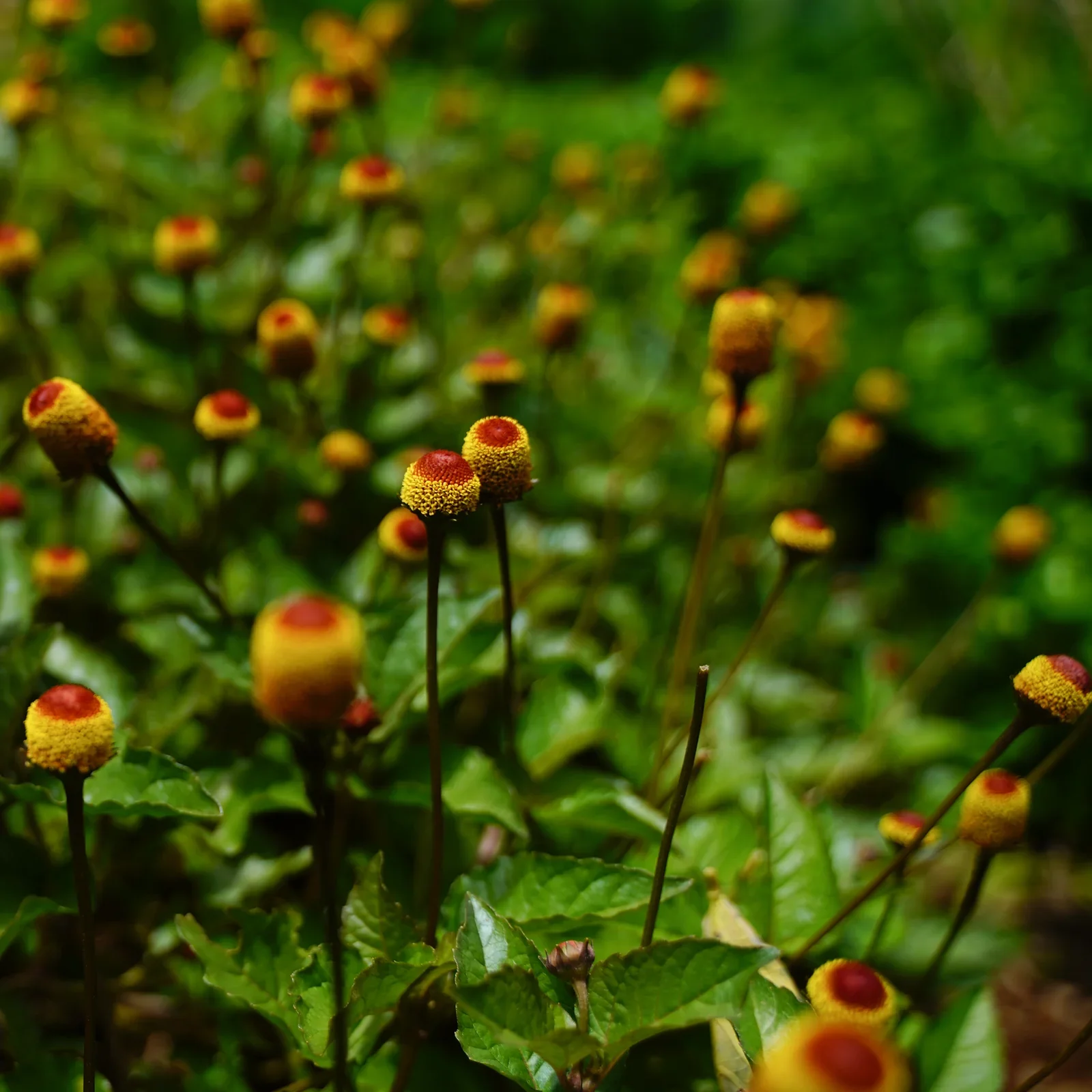
Toothache plant is a fast-growing warm-season herb best known for its unusual yellow-and-red button-shaped flowers. The leaves and flowers are edible, and the flower heads create a distinctive tingling, buzzing sensation in the mouth followed by temporary numbness. It loves heat and humidity and makes an unusual addition to edible gardens, containers, and pollinator plantings.
At a Glance
🌱 Type
Perennial herb or warm-season annual
Container Friendly
✅ Yes
💧 Water
Moderate and consistent
🌎 Growing Zone
Zone 9a - 11b as perennial
Can we grown as a warm season annual in colder areas
☀️ Sun
Full Sun to Partial Sun
Why Grow It?
Produces unusual, edible “buzz button” flowers
Loves heat and humidity
Fast growing and low maintenance
Excellent for containers and small gardens
Long summer-to-fall bloom season
Attracts bees and butterflies
Growing Tips
Plant after frost danger has passed and the soil has warmed.
Grow in full sun to partial sun for best flowering.
Keep soil consistently moist but well drained.
Give plants about 12–18 inches of space to spread.
Pinch or harvest growing tips to encourage fuller, bushier growth.
Harvest flowers regularly throughout the warm season as new blooms appear.
Harvest and Uses
Harvest young leaves and tender growing tips throughout the warm season. The leaves can be eaten raw or cooked and add a distinctive pungent flavor to salads, soups, and other dishes.
The flower heads are the plant’s signature feature. Often called buzz buttons, they are edible in small quantities and create an intense tingling sensation, increased salivation, and temporary numbness in the mouth. Because the sensation can be surprisingly strong, start with a small amount.
Edible Parts: Leaves and flower heads.
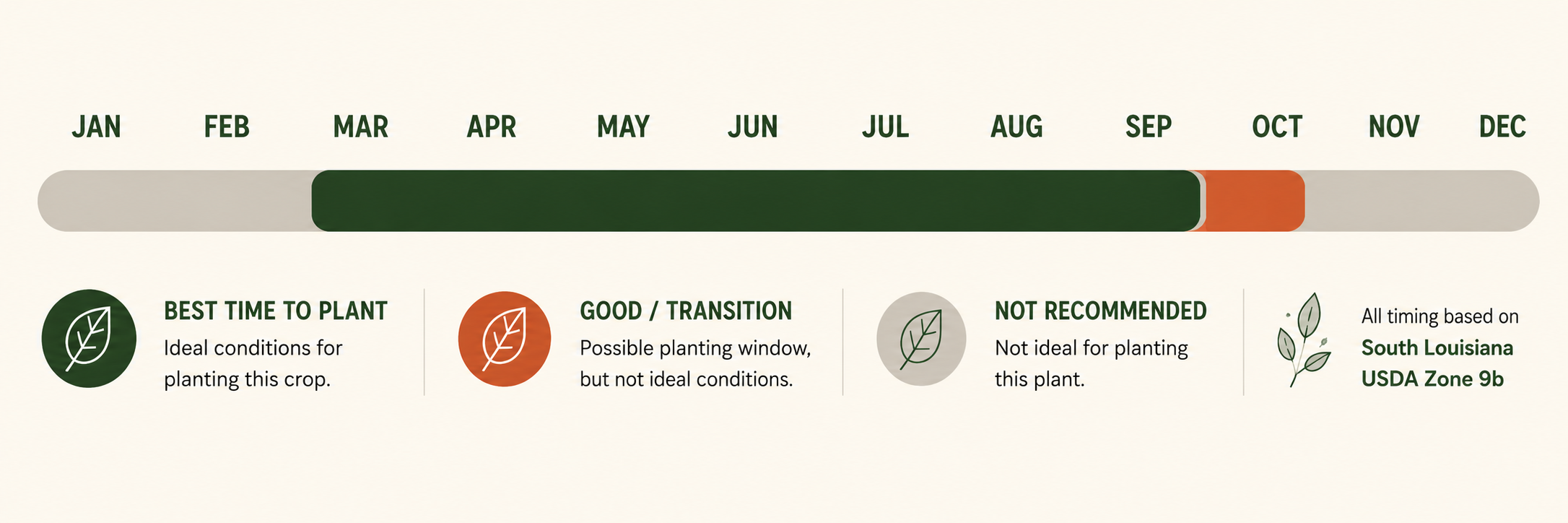
Best Time to Plant in Zone 9B
Pollinator Value
Toothache plant attracts bees and butterflies and flowers continuously through much of the summer and fall. Its long bloom period makes it a useful addition to a pollinator-friendly edible garden.
Native Status
Toothache plant is native to South America, with its range associated with Brazil through Argentina. It has since become widely cultivated throughout tropical and subtropical regions.