
Malabar Spinach
Scientific Name: Basella alba (Green) or Basella rubra (Red)
Also known as: Vine spinach, climbing spinach, Indian spinach
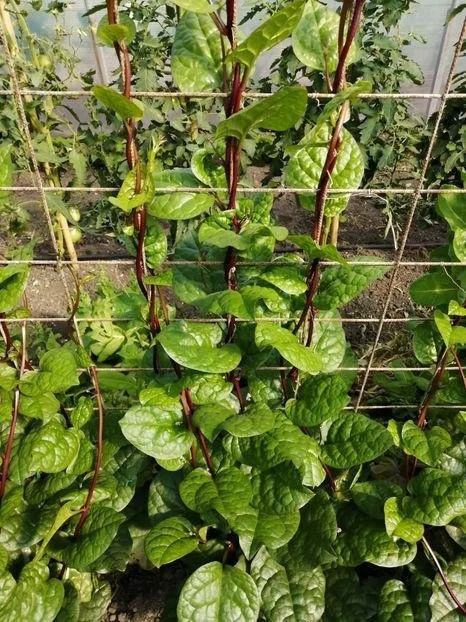
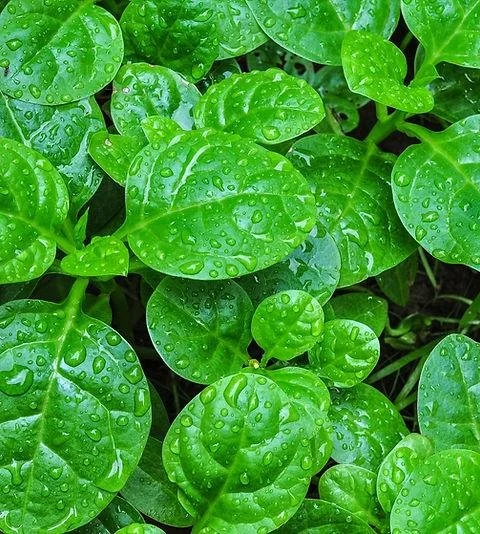
Malabar spinach is a fast-growing tropical vine grown for its thick, tender, edible leaves and stems. Despite the name, it is not a true spinach. Unlike traditional spinach, which struggles in Louisiana heat, Malabar spinach thrives during hot, humid weather and can produce continuously through summer.
At a Glance
🌱 Type
Tropical leafy vine🪴
Container Friendly
✅ Yes
💧 Water
Moderate to High
🌎 Growing Zone
Zone 7-9 annual season
Zone 10+ perennial in frost-free areas
☀️ Sun
Full Sun to Part Shade
Why Grow It?
Loves heat and humidity
Produces edible leaves all summer
Beautiful ornamental climbing vine
Great for containers and trellises
Easy to harvest continuously
A useful warm-season alternative to traditional spinach
Growing Tips
Give it a trellis, fence, or other support to climb.
Keep the soil consistently moist for the best leaf production.
Harvest often to encourage new growth.
Thrives during the hottest part of summer when many greens stop producing.
Harvest and Uses
Pick young leaves and tender stems as needed throughout the growing season.
Malabar spinach has a mild, slightly earthy flavor and a thicker texture than traditional spinach. Enjoy it:
Fresh in salads (young leaves)
Stir-fried
Added in soup
In curries
Blended into smoothies
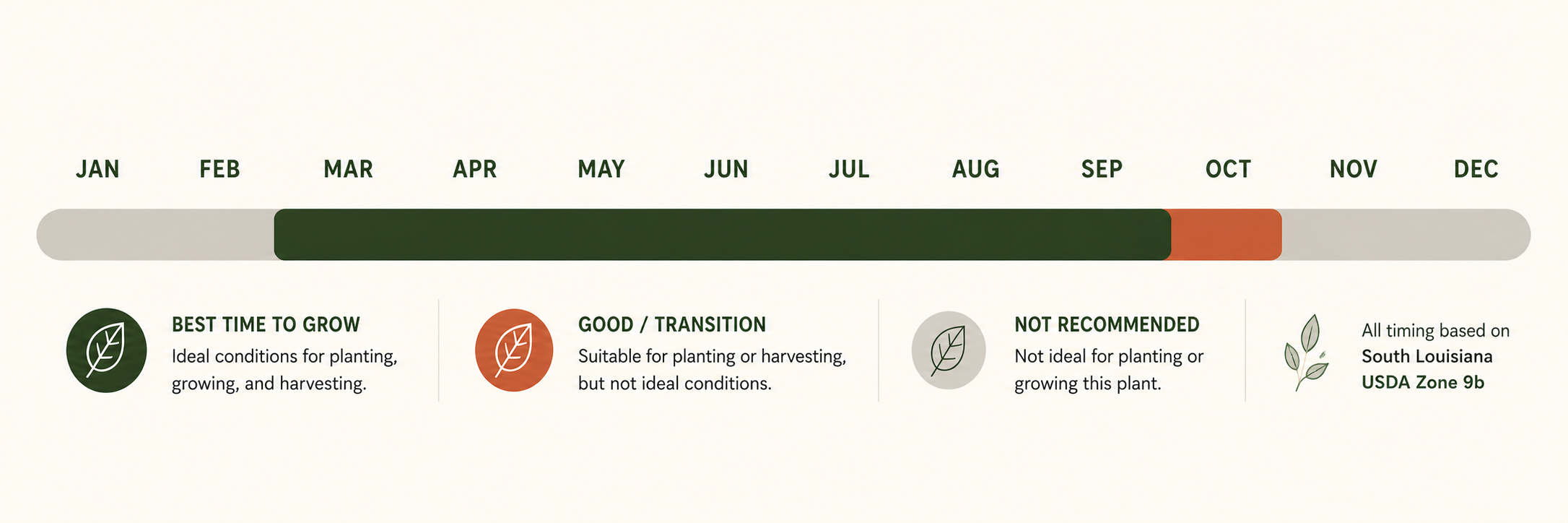
Best Time to Plant in Zone 9B
Pollinator Value
Small pinkish-white flowers can attract bees and other small pollinating insects. Malabar spinach is primarily grown as an edible crop rather than as a major pollinator plant, but flowering vines can still contribute nectar and pollen to the garden.
Native Status
Malabar spinach is not native to Louisiana or the United States. It is a tropical plant believed to originate in Asia and/or tropical regions of the Old World.
It behaves as a warm-season annual in areas that experience frost but can grow vigorously throughout South Louisiana’s long warm season.